
Middle Sacramento River Salmon and Steelhead Rotary Screw Trap Monitoring (Knights Landing)
Description / purpose
Description
The Middle Sacramento River Juvenile Salmon and Steelhead Monitoring Project at Knights Landing operates a monitoring site near the town of Knights Landing (rkm 144), consisting of paired, 8-foot rotary screw traps leashed together and anchored in river. Salmonid emigration data collected at this site provides an early warning of fish emigrating toward the Delta and allows for real-time adaptive management of CVP/SWP water operations. Monitoring begins when water temperatures decrease in the fall allowing for the safe handling of trap captured fish, usually occurring mid to late August, and will continue until the end of June, or until water temperatures increase and safe handling of trap captured fish becomes a concern. Trap catch is counted, identified to species, measured, and weighed. For salmonids specifically, data collection includes enumeration by run, life stage designation, fork length measurement and wet weight for assessing condition of individual fish.
Project Need
Recent updates to the operating criteria of the Central Valley Project, detailed in the 2019 Bureau of Reclamation Biological Assessment (BA) of the Coordinated Long-term Operation of the Central Valley Project (CVP) and State Water Project (SWP), rely on juvenile salmonid monitoring data at Knights Landing to provide an early warning of increased emigration rates of listed salmonids out of the upper Sacramento River. The real-time data provided by the program allow for data related triggers in the operation of the Delta Cross Channel gates. Daily catch data are reported to the Salmon Monitoring Team (SaMT) and are posted on the publicly accessible CalFish website for interested parties. SaMT uses catch data to advise NMFS, through the Water Operations Management Team (WOMT), of entrainment risk in CVP/SWP export facilities, the estimated proportion of juvenile salmonid populations that have entered the Sacramento-San Joaquin Delta and the data driven management triggers detailed in section 4.10.5.3 of the BA; from Oct 1 to Nov 30, if the Knights Landing Catch Index (KLCI) is greater than 3 fish.
Project Objectives
- Monitor and report the outmigration of juvenile salmonids from the Sacramento River as they move toward the Sacramento-San Joaquin Delta on a real-time basis
- Monitor, record and compare movements of emigrating salmonids during specific environmental conditions • Estimate emigrating salmonid numbers and composition in the lower Sacramento River above the Delta
- Examine the influences of Sacramento River flood relief structures on emigrating juvenile salmonids
Linked science activities
None specified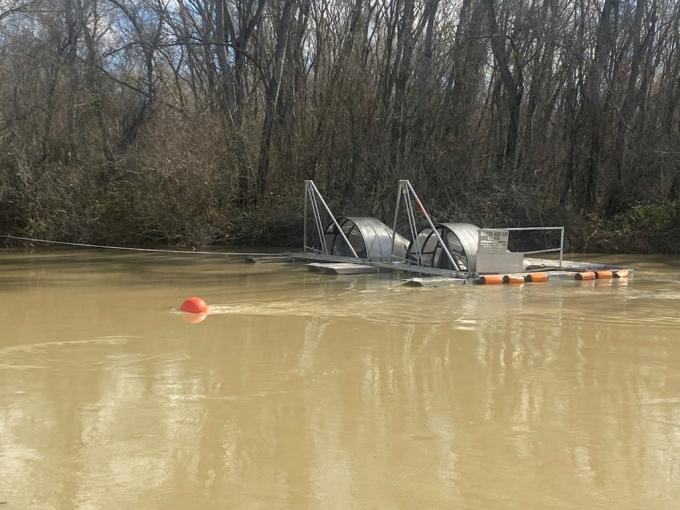
Collaborators
None specifiedActivity status
- 1 Awarded / Initiating (1963)
- 2 In progress / Ongoing (1963 - 2026)
- 3 Complete
Funding summary
Total allocated funding: $0
Location
Geographic tags
Products and outputs
| Type | Title | Description | Views |
|---|---|---|---|

|
CalFish Track Website | The CalFish Track website provides helpful overvie | 15 |
|
|
Calfish Rotary Screwtrap results | Reports from the RST program are availalbe on the | 26 |

|
Catalogue of Rotary Screw Traps that have operated in the Central Valley since 1992 | A compilation of RSTs in the Central Valley as of | 711 |
|
|
Knights Landing IEP Fact Sheet | Factsheets are concise documents that explain p | 8 |
|
|
Knights Landing IEP Data Management Plan | Data Management Plans (DMPs) are documents that | 3 |